Accra in Crisis as Severe Floods Leave 12 Dead and Over 38,000 Displaced
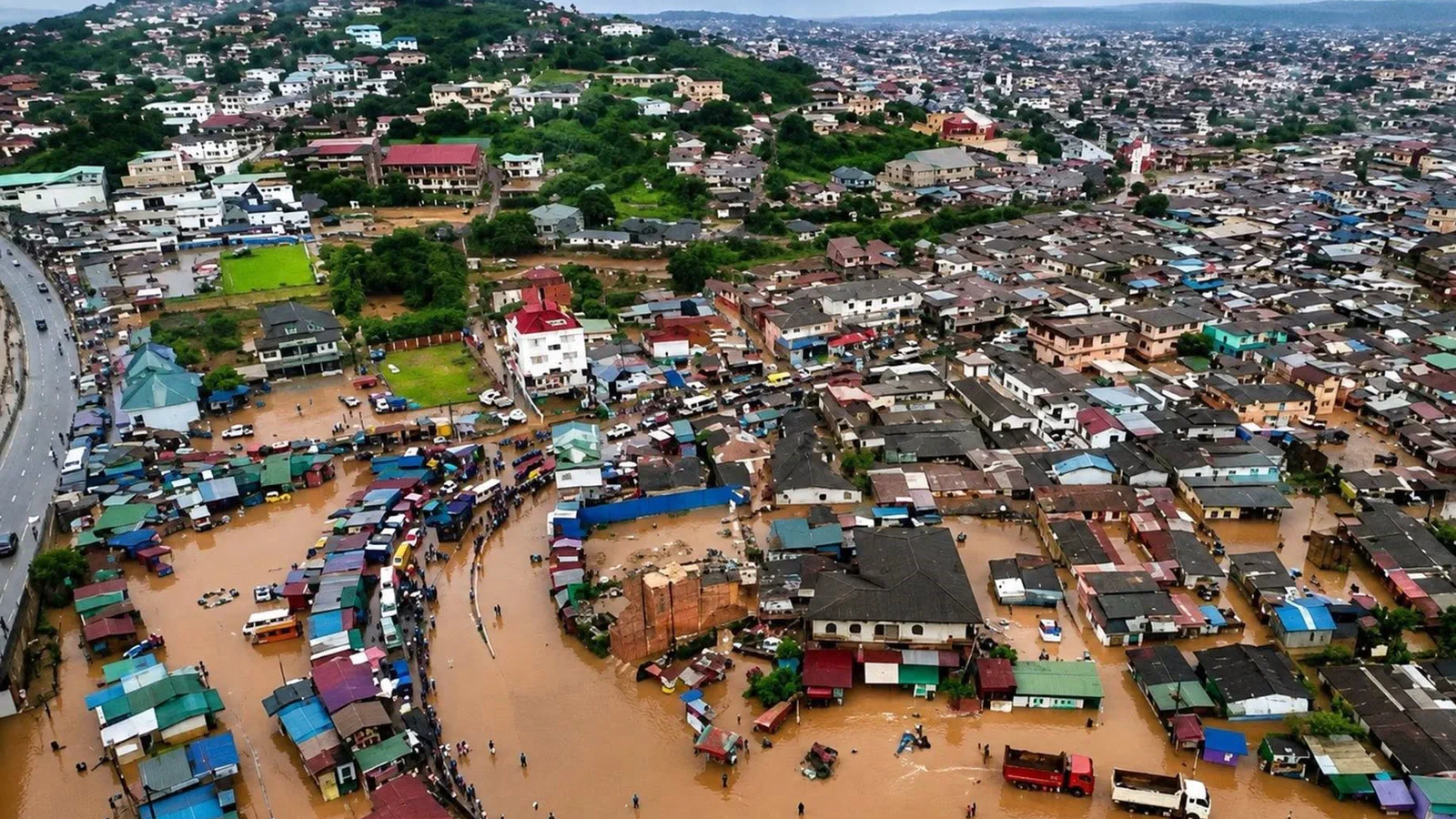
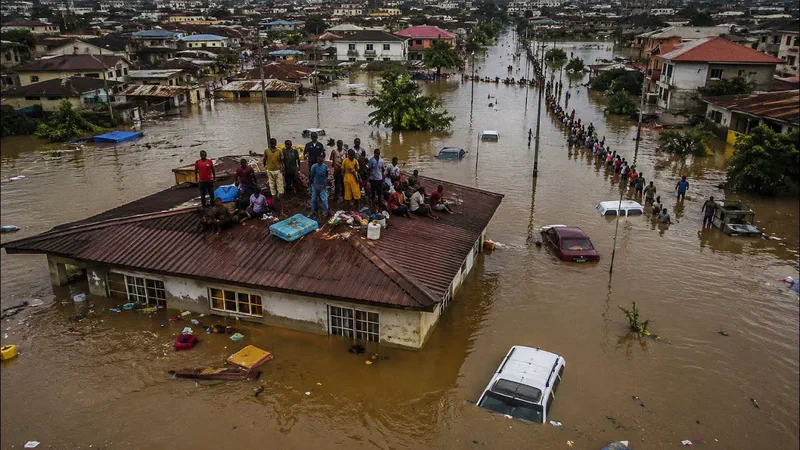
Residents stranded on rooftops after rapidly rising floodwaters submerged entire neighborhoods in Accra.
Madam Ofeibea Darko had barely noticed the first few drops of rain when the sky suddenly darkened before opening up into a relentless downpour.
Within minutes, what began as a gentle shower transformed into a violent storm, pounding zinc rooftops and sending floodwaters rushing through narrow streets and residential compounds. Realizing the danger, she quickly gathered a few belongings and fled to higher ground as water poured into her home.
“It started as a normal rain, but it quickly increased, forcing me to move to higher ground for safety because of the floods,” Madam Ofeibea Darko recounted.
For many residents of Accra, flooding has become an unfortunate annual reality. Every rainy season brings familiar scenes of submerged roads, stranded commuters and emergency rescue operations. However, the torrential rainfall on June 29, 2026, proved to be one of the most destructive in recent years.
Meteorological estimates indicate that approximately 140 millimetres of rain fell within a single day, causing rivers and drainage channels to overflow rapidly. Entire communities were overwhelmed as floodwaters spread across major parts of the capital.
The worst affected areas included Circle, Madina, Mallam, Alajo, Kaneshie, Odawna, Adabraka and Weija, bringing economic activity to a standstill while once again exposing long-standing concerns over poor drainage infrastructure, indiscriminate waste disposal and development in flood-prone areas.
“Today’s rainfall has affected every economic activity in the city, and we are stranded because cars cannot go or come,” driver Yaw Gyebi said.
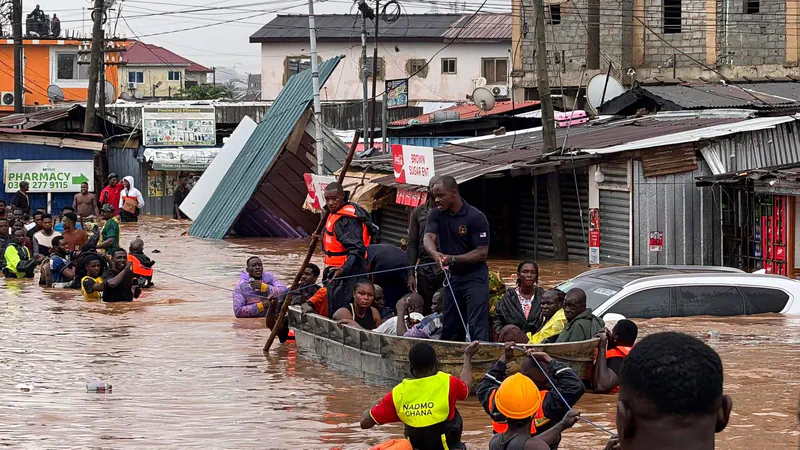
Emergency responders used boats to evacuate stranded residents from flooded neighborhoods.
Businesses devastated as floodwaters destroy livelihoods
As the floodwaters gradually recede, the full extent of the destruction is becoming increasingly apparent.
Businessman Peter Ofori described losing goods worth several thousand Ghana cedis, including electronics and household items.
“I have lost everything to the waters. I couldn’t save a single item. My years of hard work and investment have been wiped away,” he said.
For Francis Annor Gyan, a 45-year-old car dealer, the financial losses are overwhelming after floodwaters submerged his entire vehicle yard.
“By the time I realised how bad it was, the yard was already underwater. The vehicles were submerged, the engines ruined. I couldn’t save a single one,” he said while struggling to contain his emotions.
Many small businesses now face weeks or even months of recovery as owners assess damaged property and uncertain financial futures.
Families mourn loved ones
Beyond the destruction of homes, businesses and public infrastructure, the floods have claimed lives and left families searching for missing relatives.
During a parliamentary briefing on June 30, 2026, Minister for the Interior Muntaka Mubarak confirmed that 12 people had died while seven others remained missing.
“Mr Speaker, 12 people have been confirmed dead and 7 people are missing. The loss of lives from these floods is deeply heart-breaking. On behalf of the government, I extend my heartfelt condolences to the families who have lost their loved ones.”
Authorities estimate that more than 38,000 people have been displaced, forcing thousands of families to seek temporary shelter while emergency agencies continue relief operations.
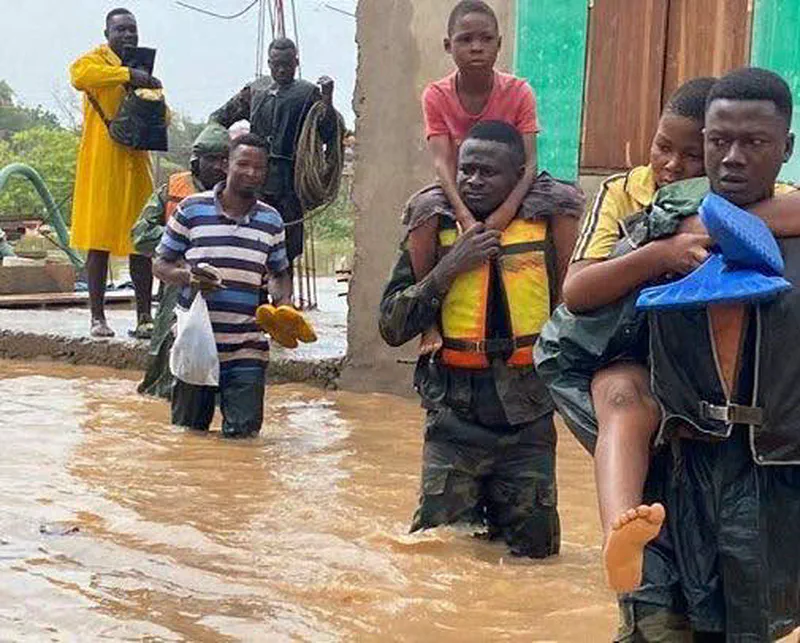
Emergency personnel carry a resident to safety as rescue operations continue across flood-hit communities.
Government announces emergency response
As debate intensifies over whether years of promises to address Accra’s flooding crisis have produced meaningful results, President John Dramani Mahama has described the disaster as “extensive” and ordered immediate financial support.
According to a statement signed by Presidential Spokesperson and Minister for Government Communications Felix Kwakye Ofosu on June 30, the President directed the Ministry of Finance to release GH¢300 million from the Contingency Fund.
The funds will finance emergency relief for affected individuals and communities while supporting flood mitigation projects intended to reduce the impact of future disasters.
“President John Dramani Mahama has directed the Minister of Finance to release GH¢300 million from the Contingency Fund to finance urgent flood relief and mitigation efforts,” the statement said.
Renewed calls for long-term solutions
While emergency relief efforts continue, many residents argue that lasting solutions remain urgently needed.
Urban planners and residents have repeatedly raised concerns about inadequate drainage systems, poor waste management and construction in waterways, warning that without significant investment and stronger enforcement, Accra will continue to experience devastating floods whenever heavy rains occur.
As families begin the difficult process of rebuilding their lives, the disaster has once again highlighted the urgent need for sustainable urban planning and resilient infrastructure capable of protecting lives and livelihoods during Ghana’s increasingly intense rainy seasons.