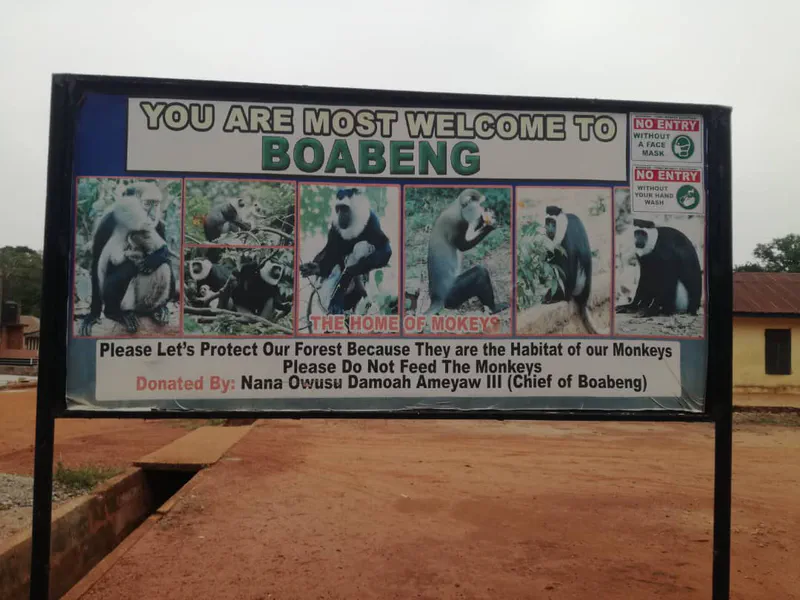
From Sacred Grove to Ecotourism Jewel: Inside Ghana’s Boabeng-Fiema Monkey Sanctuary
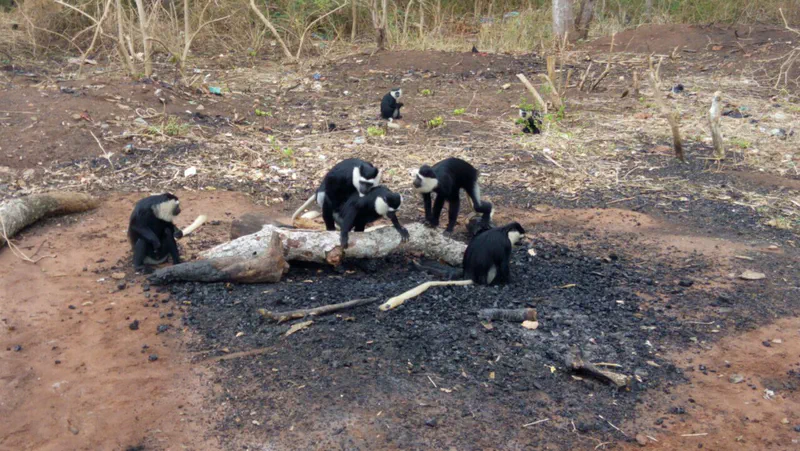
BONO EAST — Madam Afua Buruwaa, a resident of Boabeng, stood by her fire, busily preparing a meal for her family, unfazed as a small group of monkeys sat and watched from barely five metres away.
It is a rare and captivating spectacle—one that would draw curious onlookers in any other setting—but here in Boabeng, it reflects a unique coexistence between humans and wildlife that has defined the area for generations.
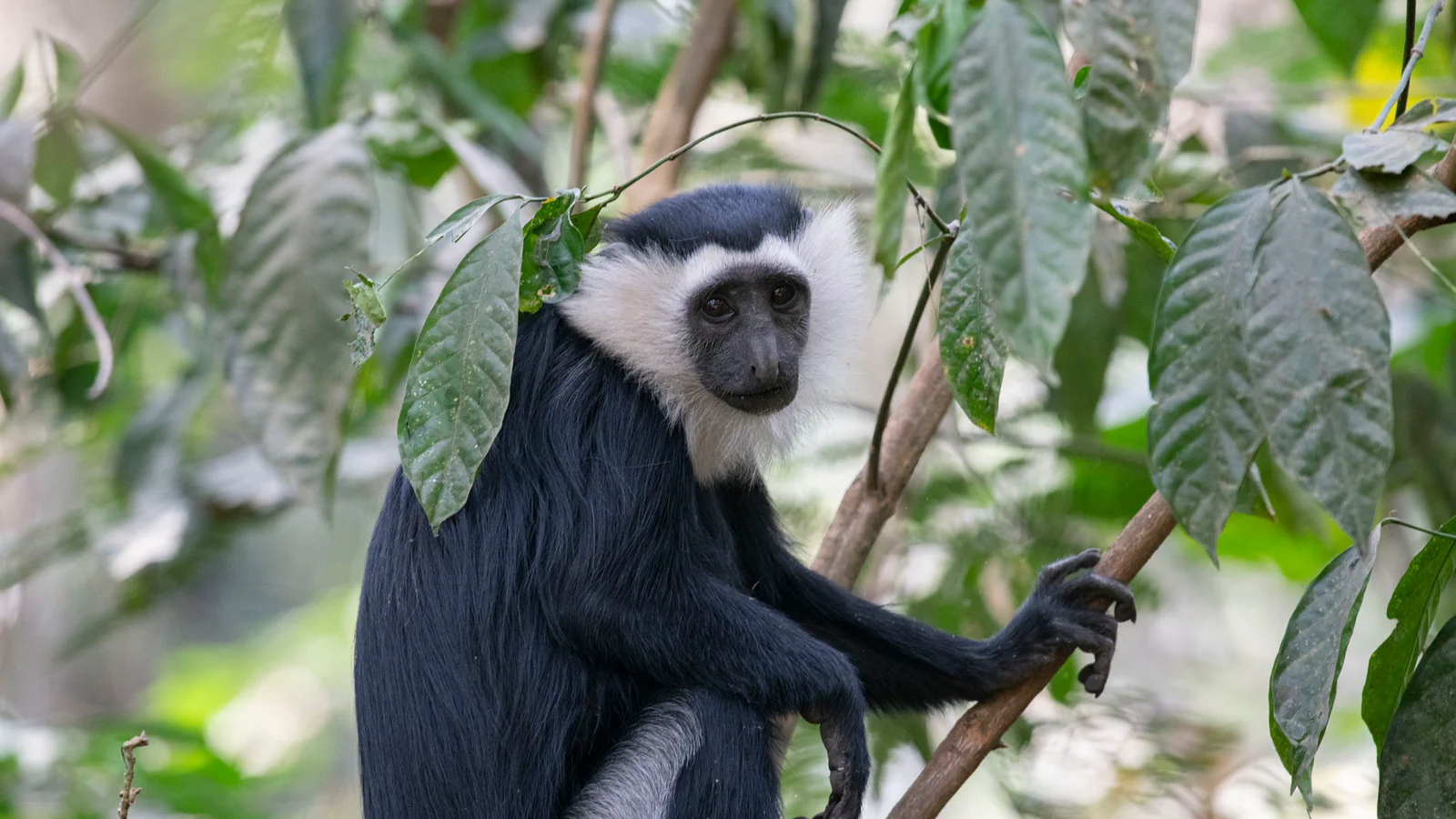
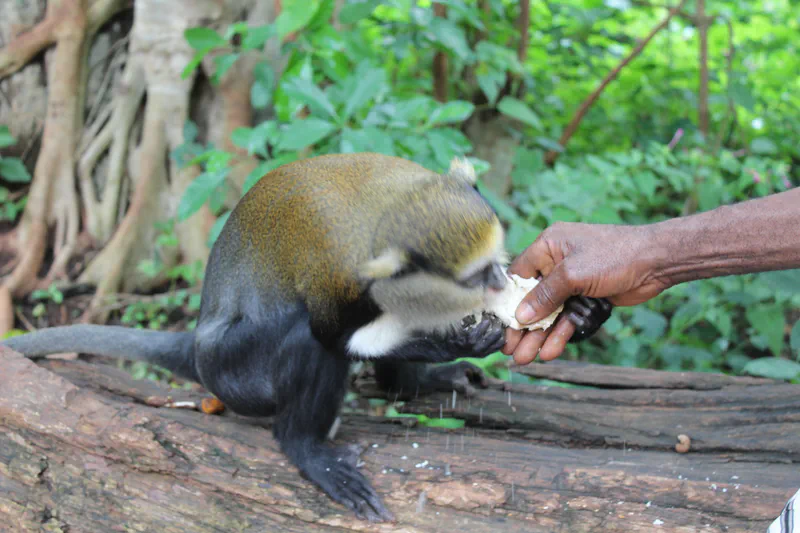
One of the Black-and-White Colobus monkeys that freely roam the sanctuary, symbolising the long-standing coexistence between people and wildlife.
In the quiet twin communities of Boabeng and Fiema in the Nkoranza North District of the Bono East Region, scenes that would seem extraordinary elsewhere unfold as part of everyday life, with inhabitants peacefully coexisting with monkeys.
The two communities are home to more than a thousand monkeys belonging to two species, living within a 4.5-square-kilometre forest designated as the Boabeng–Fiema Monkey Sanctuary—the only monkey sanctuary in the Bono East Region.
The sanctuary, home to Mona monkeys and Black-and-White Colobus monkeys as well as several other mammals, birds, butterflies, mongooses, squirrels, rodents and a wide variety of tree species, is one of the most celebrated community-based ecotourism destinations in the region.
According to official sanctuary records, a total of 21,856 visitors—made up of 20,704 Ghanaians and 1,152 non-Ghanaians—visited the site in 2025, an impressive patronage that underscores the sanctuary’s growing appeal as a major ecotourism destination.
Conservation Grounded in Tradition
Beneath the modern veneer of ecotourism lies a deeper truth: the sanctuary’s survival is rooted in spirituality, tradition, and an unwritten social contract between humans and nature.
Under this social contract, the people regard the monkeys not merely as wildlife but as sacred beings—messengers of the gods and protectors of the land—with taboos strictly forbidding their killing or harm.
According to the Chief of Boabeng and Vice Chairman of the Boabeng–Fiema Monkey Sanctuary, Nana Owusu Damoa Ameyaw III, the bond between the people and the monkeys is not a recent conservation experiment but a long-standing tradition, carefully handed down from one generation to the next.
He explained that the animals are regarded as part of the community’s heritage, protected by custom, and that preserving this relationship remains a shared responsibility—one the people are determined to uphold in the face of modern pressures and changing times.
Speaking about the origin of the practice, he reiterated that the relationship the communities have with the monkeys is rooted in long-standing tradition dating back many years, binding residents to protect the monkeys as they are considered sacred.
“A hunter by the name Nana Kwabena Amoah of Boabeng found the Fetish Dawuro, in a mysterious place surrounded by two Mona monkeys and Black-and-White Colobus monkeys, and when he decided to bring the Fetish Dawuro to the village of Boabeng, the four monkeys followed suit.”
He further disclosed that following the strange discovery, the community consulted an oracle, which revealed that the monkeys were not ordinary animals but children of the fetish Dawuro and must not be harmed.
“An oracle was consulted about the relationship between the fetish Dawuro and the mysterious monkeys. The oracle declared that the monkeys were the children of the fetish Dawuro. The oracle also declared that the monkeys should not be killed or harmed because they were sacred.”

Misconceptions About the Monkeys
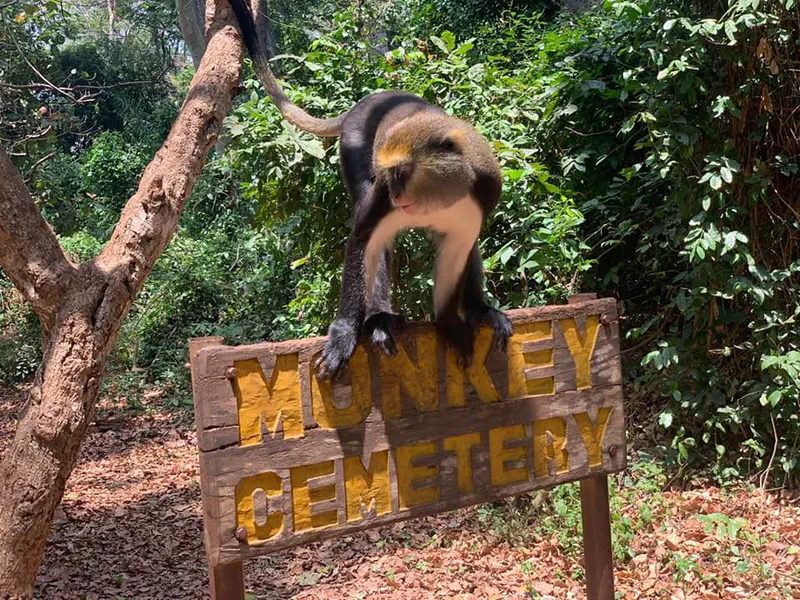
Monkeys that die at the sanctuary are wrapped in a calico, put in a coffin, and given a formal burial by the Dawuro fetish priest at a designated monkey cemetery located within the sanctuary—reflecting the cultural and spiritual significance attached to the animals.
This spiritual reverence and strong bond have generated widespread misconceptions that the monkeys were once human beings transformed into animals through supernatural means. However, such claims have been widely described as a distortion and misrepresentation of the long-held cultural narratives and oral history of the people.
Nana Owusu Damoa Ameyaw clarified that although the people of Boabeng and Fiema revere and protect the monkeys as sacred animals, they do not regard them as human beings, stressing that such assertions stem from misinterpretation of the communities’ beliefs and traditions.
“The monkeys are respected as special creatures linked to tradition and religion, a belief that has guided their protection and peaceful coexistence with residents for generations, but let me emphasise that they are not human beings and we have consistently clarified that.”

Human–Monkey Conflict
Despite the deep social, cultural and spiritual bond—and revenue generated from entrance fees, tour services, accommodation and food sales—conflict persists, particularly the destruction of crops and raids on households as the monkey population increases.
While the animals are protected by tradition, affected residents feel unfairly burdened, as compensation mechanisms are absent regardless of the magnitude of loss.
Opanin Gyau Martin, a farmer at Boabeng, recounted numerous occasions on which monkeys from the sanctuary have raided his farm, destroying crops and causing substantial losses.
“Although the monkeys are revered and protected, the persistent damage to our crops remains a major challenge, leaving farmers like me to bear the cost of conservation with little or no compensation at all.”
Challenges Hampering Revenue Generation
Even as visitors troop to the area to catch glimpses of the monkeys, residents continue to grapple with poor network connectivity and a bad road—challenges that negatively affect access, visitor experience and overall revenue generation.
Nana Owusu Damoa Ameyaw lamented that although the sanctuary possesses immense ecological, cultural and tourism potential, these constraints have limited its full appeal.
He stressed that addressing these barriers would not only enhance the visitor experience but also boost tourism numbers and increase the economic benefits derived from the sanctuary.