Bumper harvest, shrinking profits: Bono East maize and beans farmers battle price decline
Despite a season of good rains and bumper yields, maize and beans farmers across the Bono East Region say falling prices are wiping out profits and pushing households deeper into debt — a situation they warn could affect national food security if it continues.
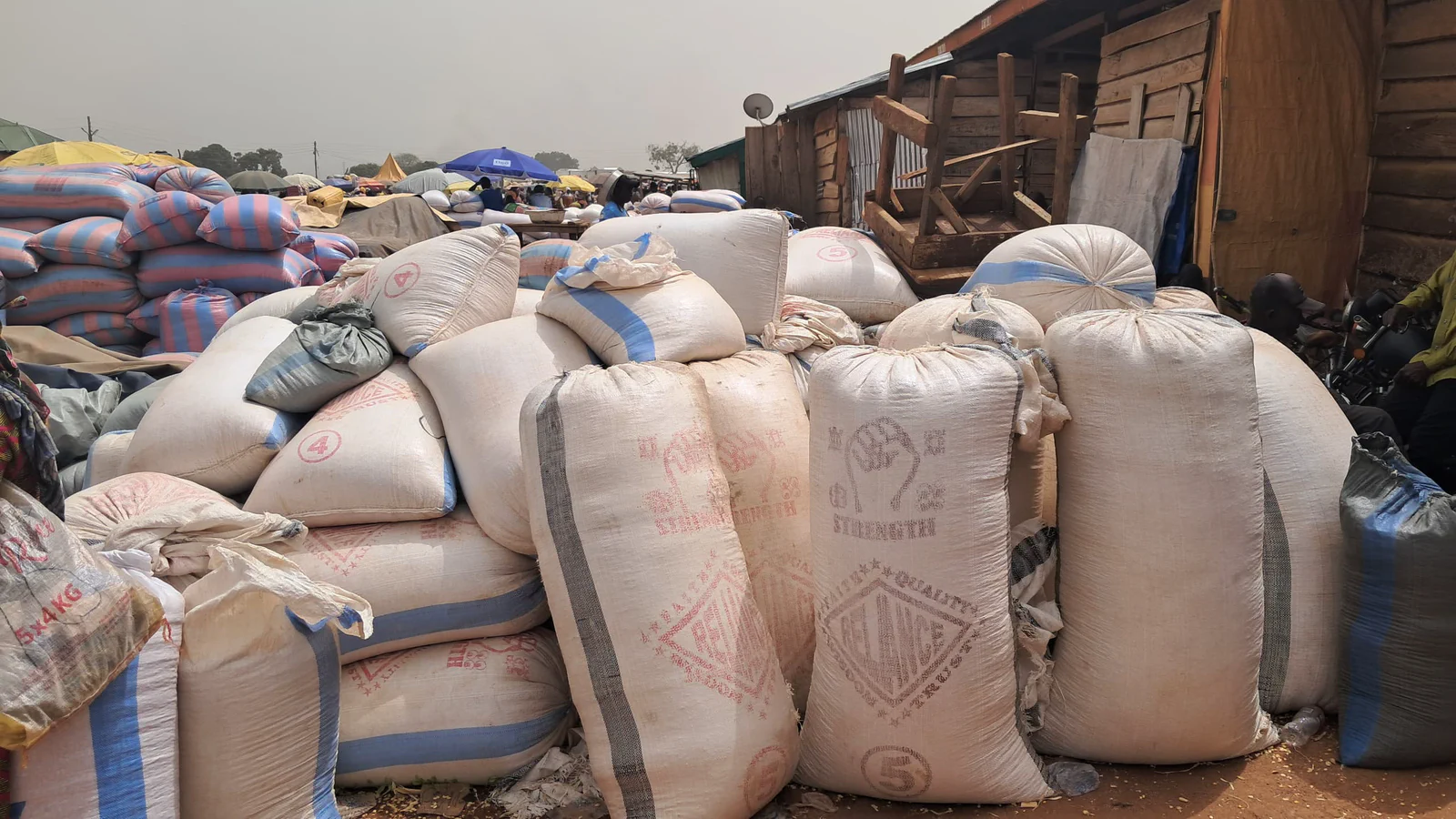
Under the scorching afternoon sun, rows of neatly stitched sacks of freshly harvested maize sit untouched in front of 40-year-old Hudu Karim’s house, his golden promise fading with each passing day.
What should have been a proud display of hard work and a sign of prosperity has instead become a painful reminder of uncertainty, as dust settles on the bags and buyers fail to arrive.
Despite experiencing a year of good rains and bumper yields, each passing day deepens his worry about mounting debts, feeding his family, paying school fees and preparing for the next planting season — as the harvest he once celebrated with pride now weighs heavily on his heart.
“I prepared the land on time, bought the right inputs, and even when the rains delayed a little, I stayed hopeful. When they finally came, the crops flourished, and I harvested more maize than I have in years. But now, the maize sits in my store, day after day, with no buyers coming,” Hudu Karim said in frustration.
Farmers caught between bumper yields and a broken market
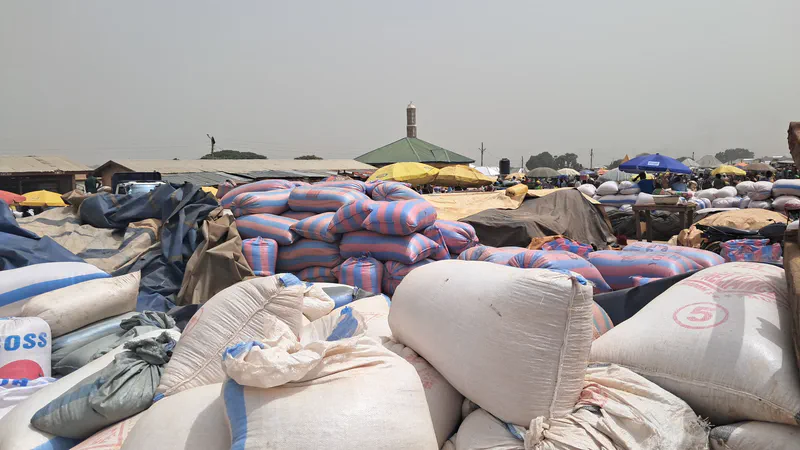
Like Hudu Karim, many maize and beans farmers in Kintampo, Techiman, Nkoranza, Atebubu and several other farming communities in the Bono East Region say they are trapped between a bumper harvest and a broken market — watching prices fall while debts rise, unsure how they will feed their families or prepare for the next planting season.
Farmers say a bag of maize that sold for about GH₵1,200 in 2025 now goes for between GH₵350 and GH₵500 in parts of the region — a sharp drop that has wiped out expected profits, leaving many unable to repay loans, cover transport costs, or prepare their farms for the next season.
Nana Gali, the Kintampo Busanga Youth Chief, who has been in the business for over 40 years, says the current price range of GH₵800 to GH₵1,000, compared to GH₵2,500 to GH₵3,000 last year, coupled with rising input costs, has turned what should have been a bumper harvest into a financial setback.
“Even after months of backbreaking work under the scorching sun, we end up earning far less than what we invested, leaving our families to bear the burden of debt and hunger,” he lamented.
A troubling outlook for food security
With prices collapsing while production costs remain high, the situation paints a troubling picture not only for farmers’ livelihoods but also for the nation’s food security.
Dickson Williams Agyei, Chairman of the Atebubu Area Farmers Association, warns that if the trend continues, it could result in reduced output in the coming seasons, shortages in local markets and higher food prices for households.
“What is unfolding in farming communities today is more than an economic setback for individual farmers; it is a warning sign that the stability of the country’s food supply could be at risk,” he cautioned.
Farmers appeal for government intervention
With livelihoods at stake and food security concerns mounting, farmers are urging the Ministry of Food and Agriculture to intervene decisively.
They are calling for stronger market support mechanisms, expanded storage infrastructure, improved seedlings and subsidies on fertilisers to restore confidence in the agricultural sector.
For now, many say they can only wait — hoping the market stabilises before the next planting season begins.
We and our partners use cookies and similar technologies to personalize your experience and gather statistical data.
By clicking "Accept All", you consent to the use of all cookies. You can read our full
Privacy Policy.