Cracking for Survival: Inside Koforidua’s Palm Kernel Oil Industry
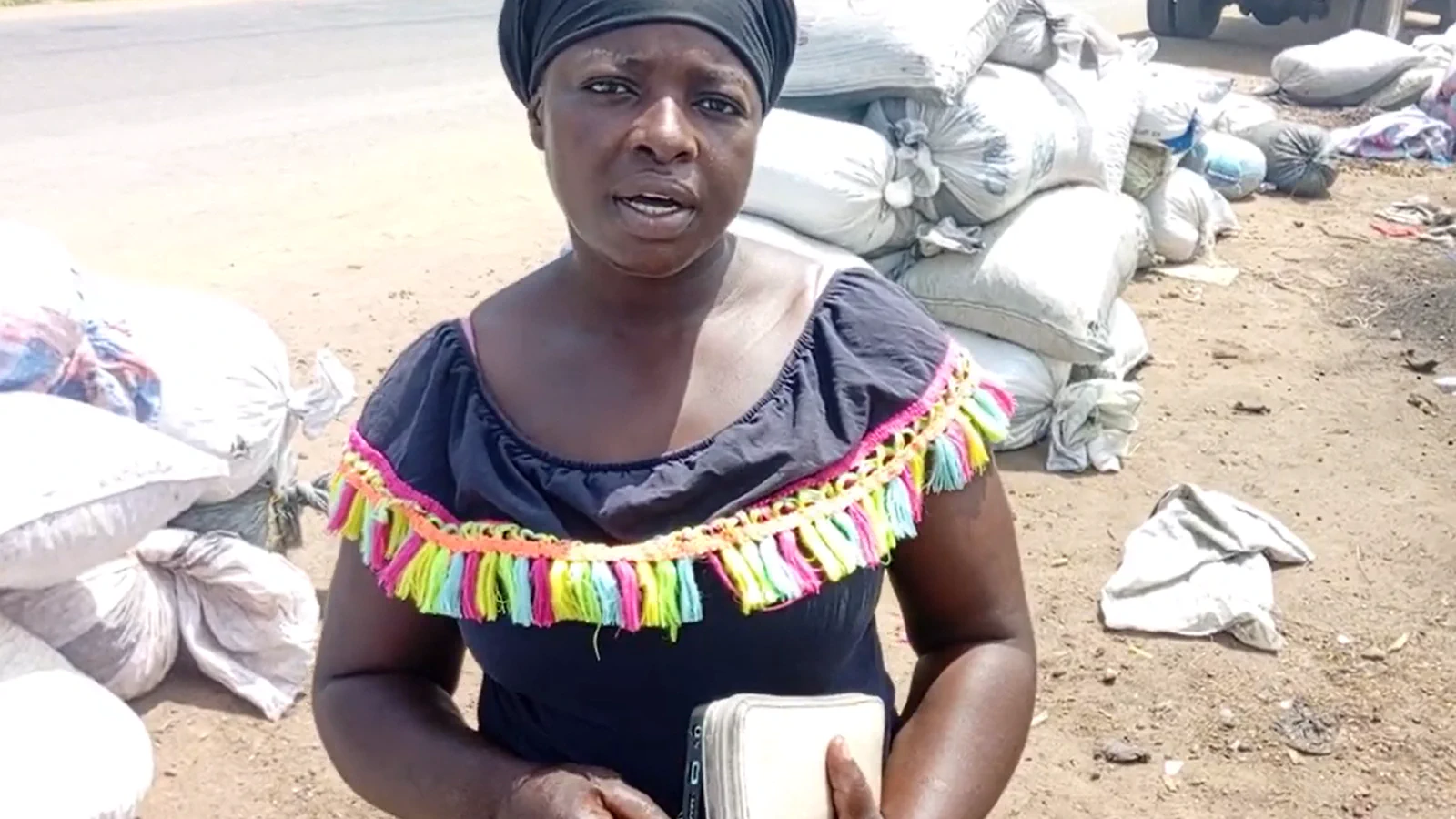
EASTERN REGION — At Magazine, the palm kernel processing enclave in Koforidua, the day begins long before the heat sets in. By the faint glow of dawn, the air is already filled with the dull thud of stones cracking nuts and the low murmur of women exchanging greetings as they settle into another demanding day.
Smoke from makeshift fires curls into the morning sky, while heaps of palm kernel shells line the edges of the worksite, bearing silent testimony to years of relentless labour.
May Amani, a familiar face in the enclave, moves with the ease and precision of someone who has mastered the craft over time. With practised hands, she sorts, cracks, and readies the palm kernel nuts for processing, barely pausing as the hours roll by. Around her, dozens of other women work in unison, their coordinated rhythm reflecting both resilience and necessity.
For Amani, this routine has remained unchanged for nearly three decades. Each day mirrors the last, shaped by long hours, physical strain, and modest returns. Yet, beneath the monotony lies a quiet determination.
The Craft and Toil Behind Every Drop of Oil
Long before it finds its way into kitchens, cosmetic jars, and industrial products, every drop of palm kernel oil begins a demanding journey shaped by labour, heat, and time. Behind its clear, golden appearance lies a complex process often hidden from the public eye.
According to May Amani, from the careful selection of palm fruits to the cracking of hardened kernels, the extraction of oil, and the final stages of purification, each step requires skill, patience, and physical endurance.
She emphasised that women, who form the backbone of this value chain, spend long hours navigating a cycle of boiling, drying, pounding, and pressing—a process rooted in tradition passed down through generations and refined through years of experience.
Giving a vivid description of the preparation process, Amani’s hands instinctively slipped into motion, mimicking each stage with a familiarity shaped by years of repetition.
“We start by drying the nuts under the sun because if they are not well dried, everything else becomes difficult. From there, the nuts are taken to a mechanical crusher, usually operated by a man. We sieve the mixture and remove the chaff, and then we separate the kernels from the shells using water and clay. The good kernels float, and the shells sink.”
She explained further that after separation, the kernels are washed and handpicked to remove impurities before being roasted over an open fire. The roasted kernels are then ground into a paste and boiled until the oil begins to rise to the surface.
A Source of Livelihood
Amani’s journey into the trade did not begin in the oil fields, but along the roadside, where she once made a living selling oranges and sugarcane. Like many women navigating the informal economy, she moved from one hustle to another in search of something more stable and rewarding.
What started as an alternative source of earnings soon grew into a full-time occupation. Over the years, she has invested her time and energy into learning every stage of the process—cracking the nuts, extracting the oil, and navigating the challenges of the market.
Today, palm kernel oil production is not just a job for Amani; it is her primary source of livelihood, sustaining her household and providing a measure of financial independence despite the physical demands and uncertainties that come with the work.
“This work has helped me raise my children. One has completed university, and another has gone to teacher training college. It has become my source of livelihood,” she disclosed with a hint of pride.
Uncertain Economics of Trade
Behind the steady rhythm of production lies a fragile and often unpredictable economic reality. For many processors, the returns from palm kernel oil are anything but consistent. Prices of raw palm kernels fluctuate with seasonal supply, while the cost of transportation, firewood, and basic equipment continues to rise.
For women like Gifty Aglo, the unpredictability of the trade means living day-to-day, with income tied directly to output and market demand. There are no guarantees—only the hope that each batch produced will fetch a price high enough to sustain the next cycle.
“A good production can give us about 20 gallons. One gallon can sell for around GHS500, but the challenge lies in getting paid, as some buyers take the oil on credit and delay payment. Some do not pay at all.”
Shared Challenges Across the Enclave
Across all interviews, workers consistently highlight similar challenges: lack of sheds, exposure to harsh weather, limited sanitation, and delayed payments from buyers.
For many producers, these challenges are not occasional inconveniences but daily realities that slow productivity, increase hardship, and underscore the need for improved facilities to support the trade.
“We have no sheds, so we are always at the mercy of the weather. When it rains, work stops, and when the sun is too harsh, we struggle to continue. There are also no sanitation facilities here, and we urgently need modern machines to support our work and reduce the burden of manual labour,” Gifty Aglo bemoaned.
Local Assembly Promises Support
The Municipal Chief Executive for New Juaben South, Ransford Owusu Boakye, has acknowledged the situation and the growing concerns raised by stakeholders within the palm kernel oil processing sector.
He assured that efforts are being considered to engage relevant authorities and explore practical interventions aimed at improving working conditions, enhancing productivity, and supporting the growth of the local agro-processing industry.
“The place has always been like this, but we have decided it is time to upgrade it. We are engaging stakeholders and considering support with machinery and improved facilities.”