The Rise of AI Deepfakes in West African Fraud
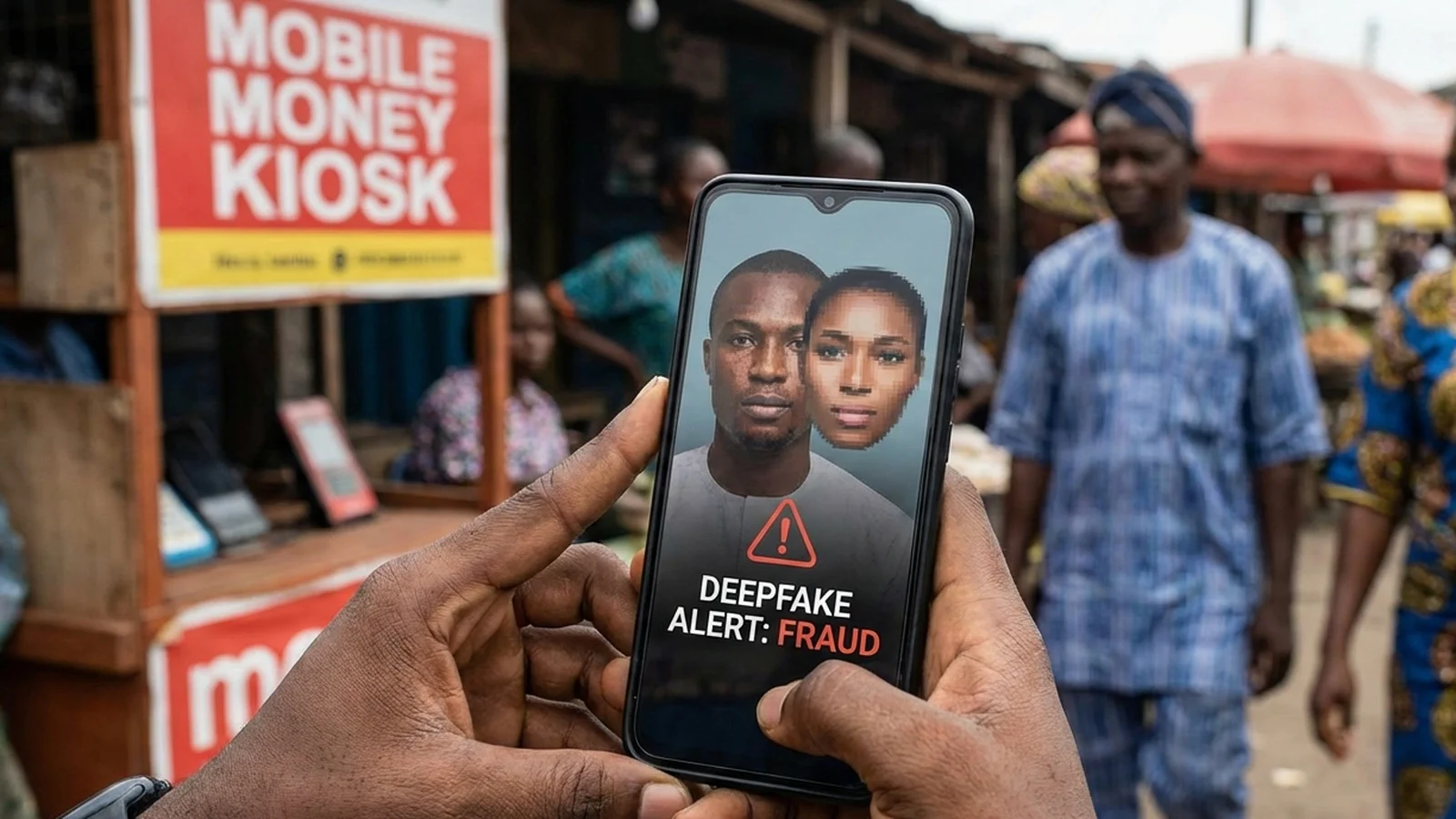
It is a typical Tuesday morning when Joojo, a manager at a wholesale shop, receives a video call from an unknown number. On the screen appears his boss—same face, same voice, same mannerisms.
The message is urgent.
“Some goods will be coming in and need to be cleared. I’m sending a prompt to the work mobile money SIM. Just type in the PIN now before the supplier gets there.”
Moments later, the money is gone.
This was not a coincidence, nor a simple scam. It was a sophisticated social engineering attack powered by artificial intelligence and deepfake technology.
In cybersecurity, social engineering does not rely on hacking systems, but on manipulating human psychology—trust, fear, urgency, and authority—to bypass even the strongest technical defenses. Deepfakes have now elevated this tactic to an entirely new level.
How Deepfake Fraud Works
Artificial Intelligence is advancing rapidly, and while it delivers enormous benefits, it also enables new forms of abuse.
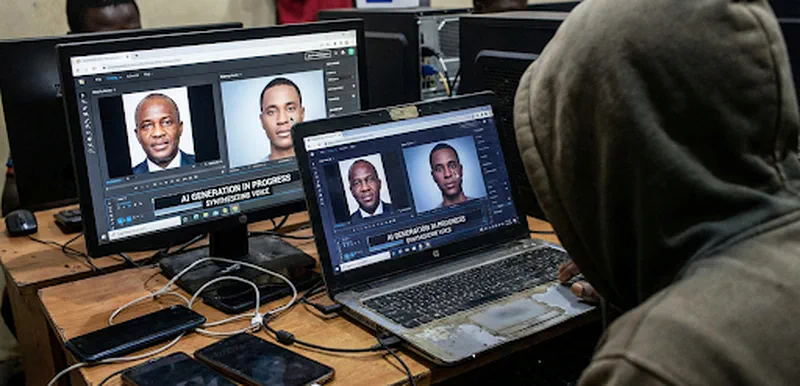
Deepfakes are AI-generated or AI-altered images, videos, or audio recordings that convincingly imitate real people. With only a handful of photos and short voice samples, modern software can reconstruct a person’s facial structure, expressions, body movement, and voice.
Using advanced face-tracking tools, high-performance consumer hardware, and an HD camera, fraudsters can now create realistic video impersonations in a matter of hours. Recent developments in voice cloning mean that an entire digital replica of a person—face, voice, and mannerisms—can be produced quickly and at relatively low cost.
What makes this particularly dangerous is accessibility. These tools, once limited to research labs, are now openly promoted on social media platforms by individuals advertising “services” that directly facilitate cybercrime.
Why West Africa Is Especially Vulnerable
Deepfake fraud is a global threat, but its impact in West Africa is uniquely severe.
The region has experienced rapid digital adoption without equivalent growth in institutional safeguards. Mobile phones are the backbone of daily life, handling communication, commerce, and even governance. Platforms like WhatsApp are used for everything—from family conversations to business transactions—while mobile money systems serve as the primary financial infrastructure for millions.
This high level of trust in mobile-based communication makes impersonation attacks devastatingly effective.
The danger extends beyond financial fraud. During the build-up to the 2024 and 2025 election cycles, AI-generated audio began circulating online, including manipulated voice recordings allegedly featuring Mahamudu Bawumia, shared widely on platforms such as TikTok before being identified as fabricated.
Beyond politics, West African societies are deeply rooted in communal trust and family networks. Fraudsters are now weaponizing that trust, moving away from poorly written phishing emails and generic SMS messages toward highly personalized, audiovisual deception that feels authentic and emotionally compelling.
Staying Safe in the Age of Artificial Intelligence
The rise of deepfakes requires a fundamental shift in how individuals assess digital interactions.
Old-fashioned verification methods are once again essential. Calling a trusted contact using a saved number, establishing safe words within families or organizations, and questioning artificial urgency can stop many attacks before damage is done.
Technology will continue to advance, and AI tools will become cheaper, faster, and easier to access. As this happens, digital skepticism must grow alongside digital convenience.
Trust—but verify. Then verify again.